Internal systems
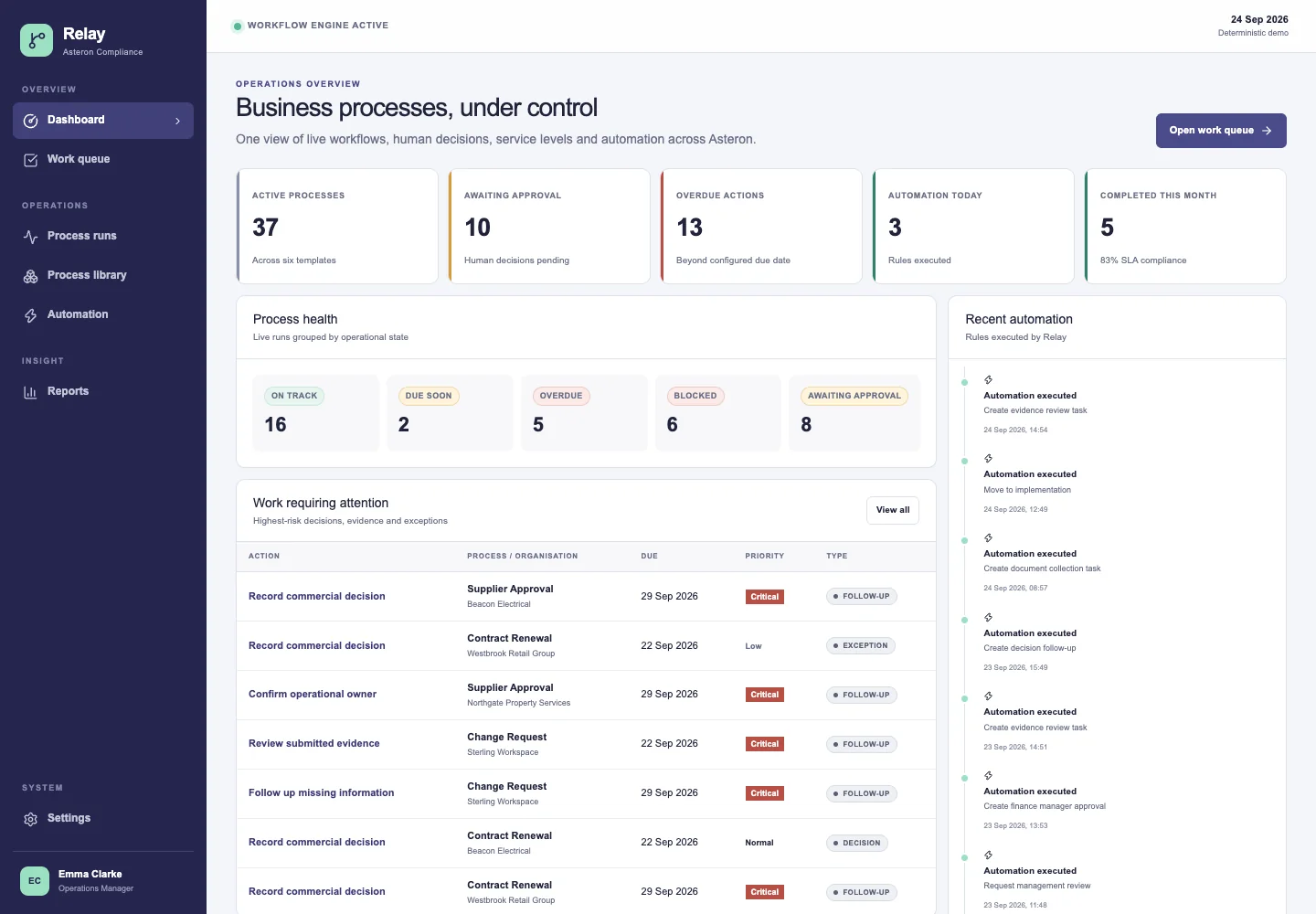
A focused operational workspace could bring stages, tasks, handovers, approvals and status views into one workflow designed around the team.
Bespoke software development · Essex
Turn inefficient manual work and disconnected systems into a clearer digital workflow, with software scoped around the way your people and customers actually need to work.
Start with one costly process · Build only what the business needs
Consultancy and discovery
Spreadsheets, inboxes, repeated data entry and disconnected subscriptions can turn otherwise simple work into manual admin, uncertain handovers and information gaps.
Discovery starts with the process causing the most friction. The people, decisions, data, existing tools and exceptions involved are mapped before features are chosen, so the recommendation can be based on the business problem rather than a predetermined build.
That consultancy may identify a focused bespoke system, an integration between existing tools or an off-the-shelf product as the sensible route. If custom development is justified, direct collaboration helps preserve the operational detail that gives the software its value.
Identify where time, information or customer experience is being lost before deciding what to build.
Workflows and interfaces reflect real roles, decisions and edge cases rather than an idealised process diagram.
Where appropriate, scope the highest-value workflow first, then use real feedback to guide support and ongoing improvement.

Software possibilities
These are examples of capability, not claims about previous deliveries or a fixed package. Any recommendation and feature set would be defined through discovery.
A focused operational workspace could bring stages, tasks, handovers, approvals and status views into one workflow designed around the team.
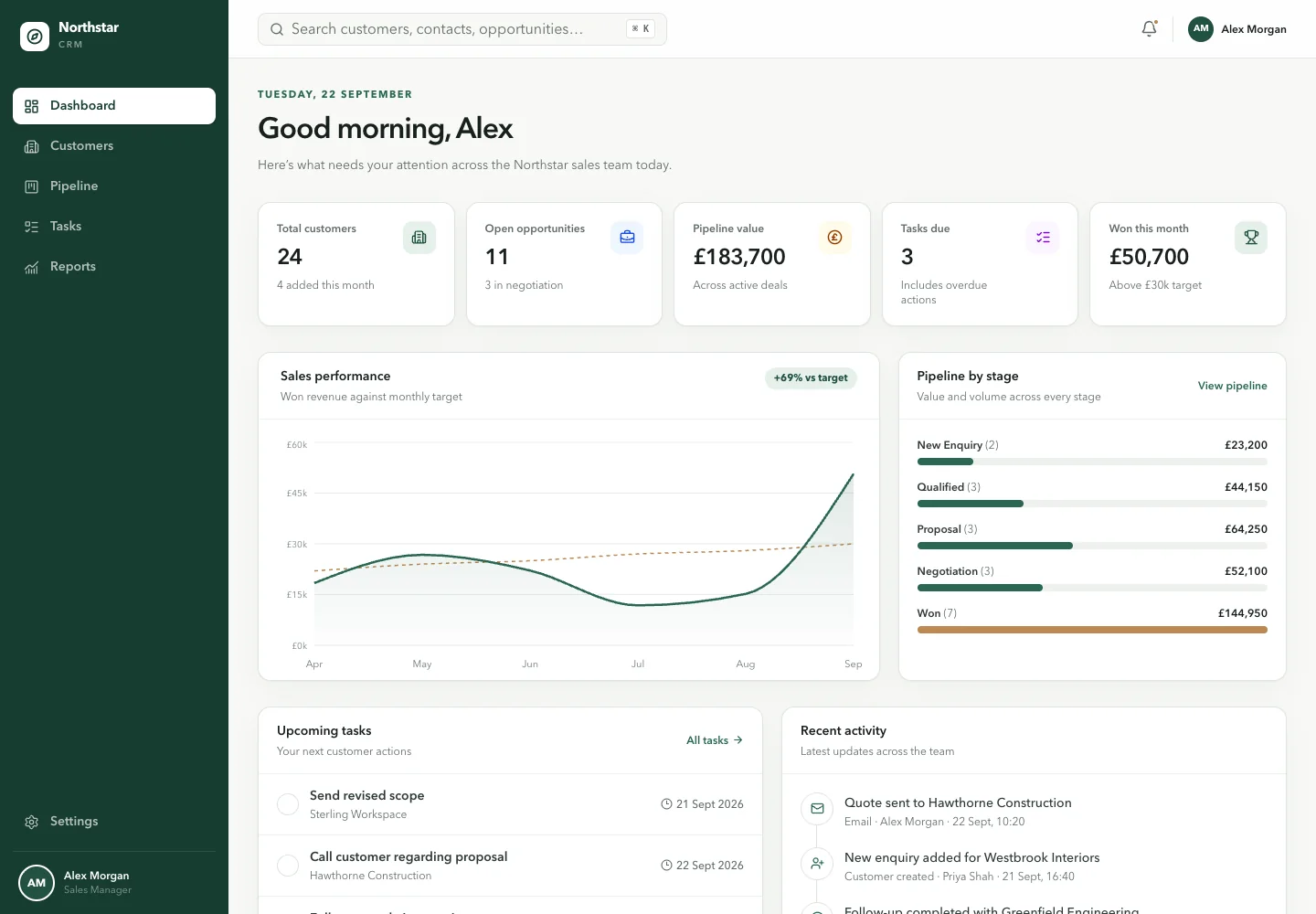
Explore a CRM shaped around customer records, ownership and the stages that matter to your business. View the specialist service →
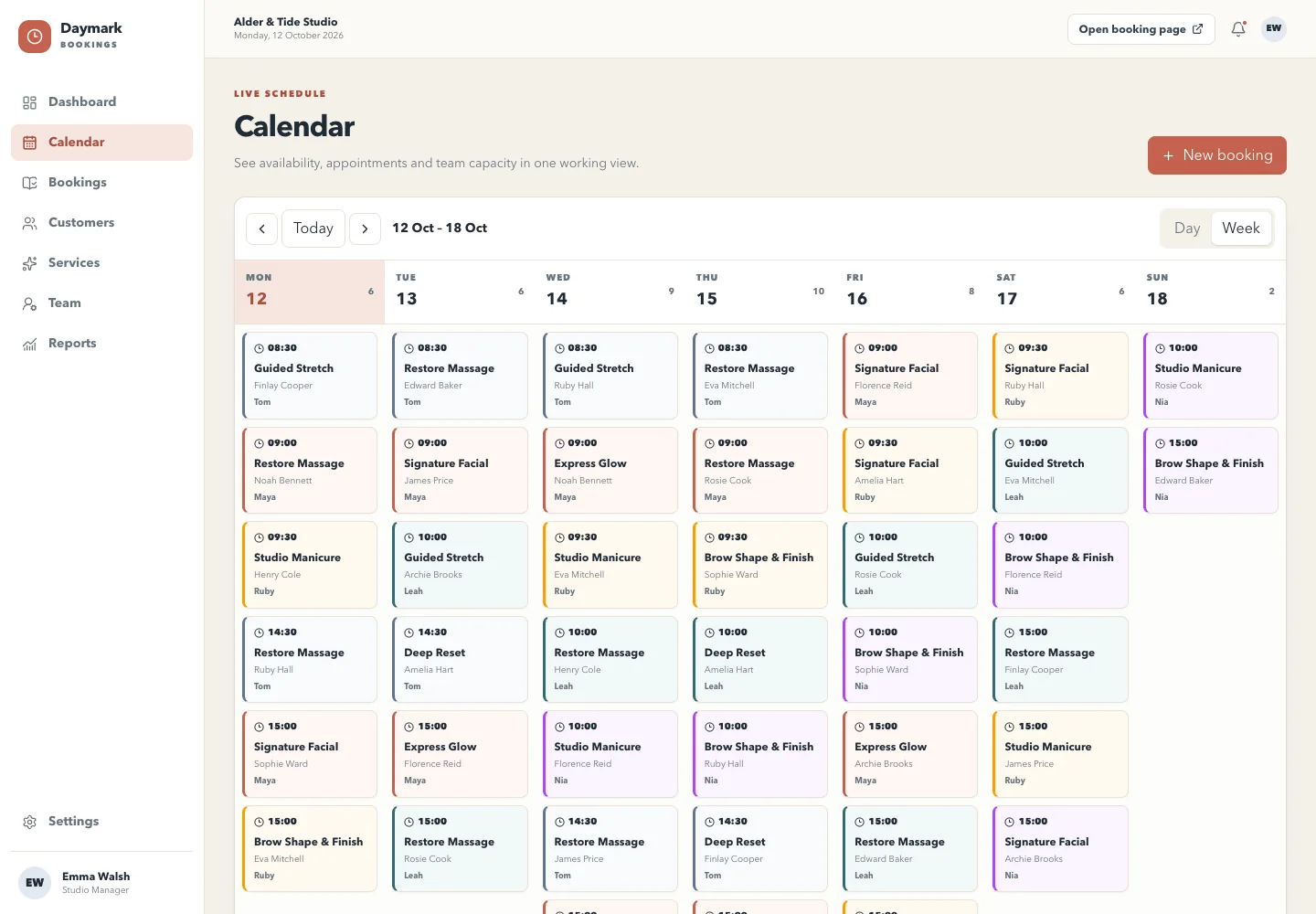
03Explore booking software shaped around your availability, resources, customer journey and operational rules. View the specialist service →
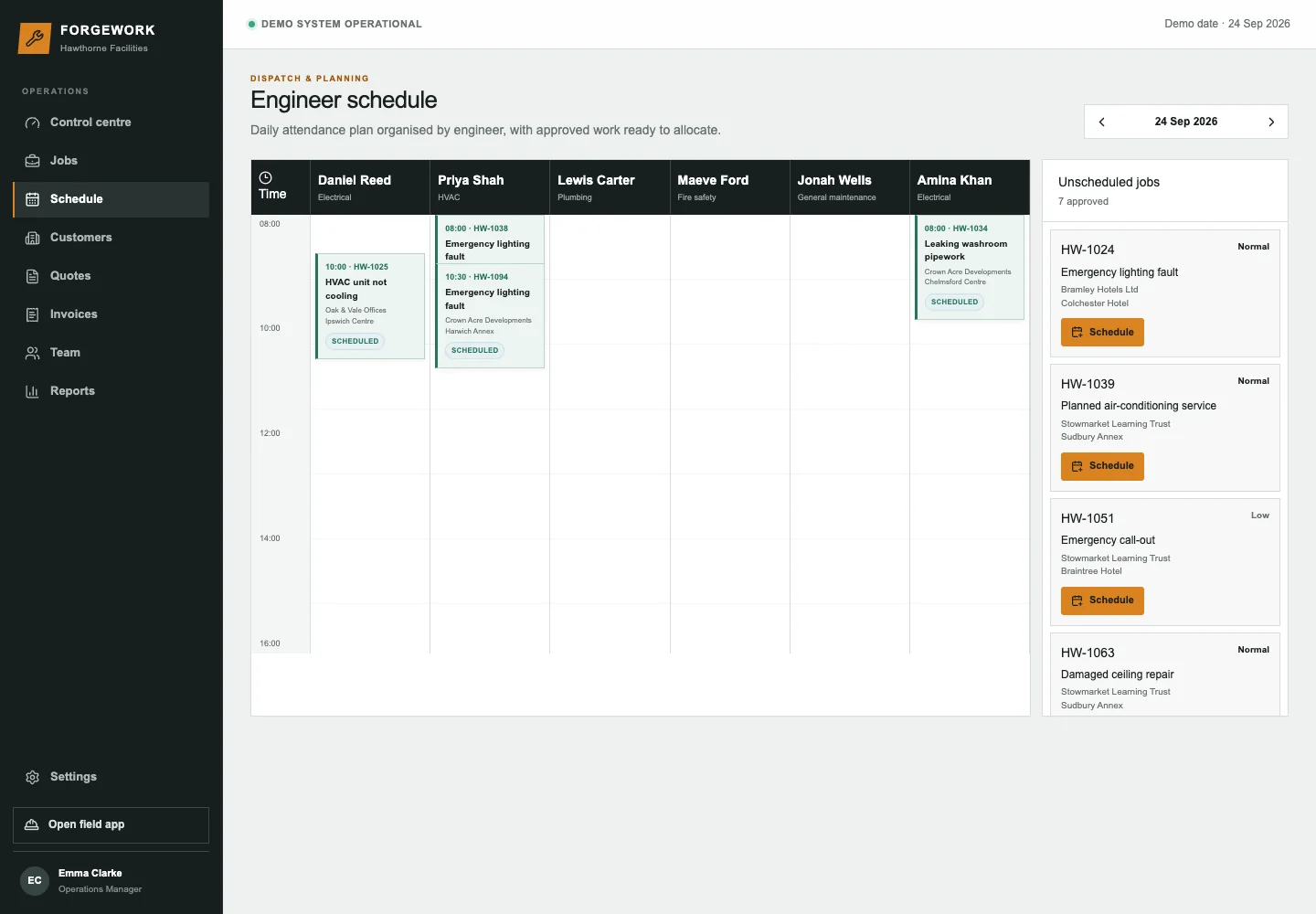
A secure portal could let customers share information, view progress, access relevant documents or complete agreed actions where the scope requires it.
Where third-party access and permissions allow, APIs and integrations could connect existing systems and reduce repeated entry between separate tools.
Carefully scoped triggers, notifications, routine updates and dashboards could reduce duplicate effort while keeping decisions and exceptions visible.
From discovery to improvement
Early decisions focus the scope and expose edge cases; review after launch can then guide support and worthwhile further development.
Understand roles, steps, data, handovers, exceptions and the cost of current friction.
Prioritise the highest-value workflow and agree what success looks like before development.
Shape the interface, develop the system and review real workflows at practical checkpoints.
Validate with realistic scenarios, release carefully and, where ongoing support is agreed, refine the system in response to use and feedback.
Choosing the right approach
Custom development is not automatically better than established software. It becomes valuable when the way you work creates an advantage, existing tools force costly compromises, or multiple systems leave an important workflow fragmented.
The first conversation is used to understand that case—not to push every idea towards a large build.
Describe the process causing frictionA useful starting test
Software questions
You do not need a technical specification. A clear description of the current process is the most useful place to begin.
Talk through an ideaCost depends on scope, roles, workflows, integrations and technical requirements. Discovery is used to define a realistic first version before a clear proposal is provided.
Often, but the spreadsheets are first reviewed to understand what they represent, who uses them and which flexibility must be preserved. The right result may be a focused workflow tool rather than a direct spreadsheet copy.
Potential integrations are assessed individually. Feasibility depends on the other platform, its available interface, data quality, permissions and the value of connecting it.
Timing varies with scope and complexity. A focused first workflow can be significantly smaller than a complete operational platform, which is why staged delivery is considered during planning.
Ownership, hosting, access, third-party services and data responsibilities are set out clearly in the proposal for the specific project rather than assumed.
Yes. Ongoing maintenance, monitoring and further development can be scoped around the system and how important it is to day-to-day operations.
Explore a software idea
Describe what happens today, who is involved and where information or momentum gets lost. Technical terminology is not required.
Target response within 24 hours.